


Mastering Drawing Techniques and Tools to Elevate Your Artistic Skills
- Baylin Bruell
- 7 days ago
- 8 min read

Drawing is one of the most accessible and rewarding forms of art. Whether you are just starting or have some experience, understanding different drawing types and the tools available can significantly improve your work. This post explores various drawing styles, essential tools, and practical tips to help you take your art to the next level.
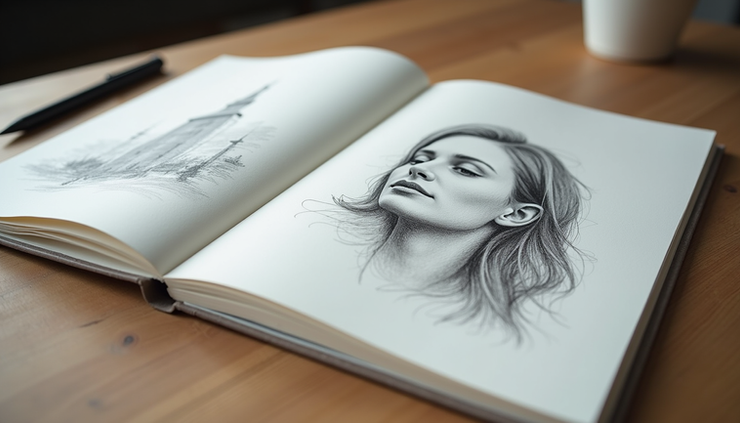
Different Types of Drawing
Drawing is a broad field with many styles and techniques. Knowing these can help you find your preferred approach or expand your skills.
1. Line Drawing
Line drawing is an artistic technique focusing on using lines to define shapes and forms without shading or color. Known for its simplicity and clarity, it allows artists to convey ideas with precision. This technique is used in sketches, architectural plans, and comic art, each applying it uniquely to achieve specific effects and communicate visual narratives.
Sketches: forms the foundation for more complex artwork. Artists use fluid lines to capture the essence of subjects, enabling rapid exploration of ideas without color constraints. Varying line weight adds dynamics, guiding the viewer's eye and creating movement within the composition.
Architectural Plans: rely on line drawing to convey structural designs and spatial relationships. Precise lines illustrate dimensions and proportions, with line weight indicating different elements like walls and doors, ensuring clarity and aesthetic appeal.
Comic Art: Defines characters and actions, using line weights to differentiate elements and express emotions. Lines suggest movement and dynamics, creating engaging stories that capture the audience's imagination. The absence of shading focuses attention on the interplay of lines and narrative.
Key Tip: Successful line drawing depends on controlling line weight and direction. Varying thickness and angles suggest depth and texture, enhancing visual interest and inviting deeper engagement with the subject. Line drawing remains a vital form of expression, valued for conveying complex ideas and emotions through simple lines.
2. Contour Drawing
Continuous line drawing involves outlining a subject without lifting the pencil, serving as both a creative exercise and a tool for enhancing artistic skills. It significantly improves artists' observation skills, essential for accurately capturing their subjects.
Observation Skills: Continuous drawing compels close observation of a subject's contours and details, fostering a deeper understanding of form and proportion. This heightened observation helps artists recognize subtle nuances, enhancing their ability to accurately translate three-dimensional forms into two-dimensional representations.
Hand-Eye Coordination: Continuous line drawing enhances hand-eye coordination by requiring the hand to move in harmony with the eyes, following the subject's lines and shapes. This synchronization improves fluidity and precision, making the translation of vision to page more instinctive and resulting in more confident, expressive drawings.
Variation: Blind Contour Drawing
Blind contour drawing is an intriguing variation where the artist avoids looking at the paper, focusing solely on the subject. This technique challenges the artist to use observational skills and memory, enhancing their ability to capture the subject's essence without distraction.
Blind contour drawing produces unexpected and delightful results by allowing instinctive and spontaneous expression without visual feedback. This exercise helps artists overcome perfectionism, embracing imperfections. Although the drawings may seem abstract or distorted, they often possess a unique character and energy reflecting the artist's genuine engagement with the subject.
Benefits Beyond Artistic Skill
Promotes Mindfulness: Continuous line and blind contour drawing offer benefits beyond traditional art skills. They can be meditative practices, helping artists achieve a state of flow, promoting mindfulness, relaxation, and stress relief.
Encourages Creativity: These drawing exercises foster creativity by encouraging artists to experiment with perception and interpretation. By moving away from conventional methods and embracing continuous line drawing, artists can explore new perspectives and develop a personal style.
3. Gesture Drawing
Gesture drawing quickly captures a subject's movement and posture, conveying a figure's essence. This fundamental technique in studying human anatomy and motion emphasizes dynamic qualities over intricate details. Artists use loose, flowing lines to express action and energy, creating a sense of life and spontaneity.This style is common in figure drawing and animation, where accurately representing movement is crucial. Gesture sketches, ranging from a few seconds to a couple of minutes, serve as a foundation for detailed studies, challenging artists to capture the pose's essence without focusing on finer details.
Figure Drawing: During the gesture drawing process, artists often concentrate on the overall shape and flow of the body, using sweeping curves and angular lines to illustrate the weight distribution and balance of the figure. This approach not only enhances the visual impact of the drawing but also aids the artist in understanding how the body moves through space.
Animation: gesture drawing plays a crucial role as well, as animators rely on these quick sketches to develop character poses and actions that convey emotion and narrative. The fluid lines used in gesture drawing help to establish a rhythm and energy that can be translated into animated sequences, ensuring that characters feel alive and relatable to the audience.
Key Tip: Gesture drawing can be practiced with various subjects, such as animals and objects, as movement and posture principles apply universally. By honing gesture drawing skills, artists enhance their understanding of form and motion, resulting in more dynamic artwork across mediums. It is an invaluable tool for capturing the vitality and essence of subjects.

4. Hatching and Cross-Hatching
These techniques use parallel or intersecting lines for intricate shading and texture, enhancing a drawing's visual appeal. Line orientation and density control the piece's tone and depth. By adjusting line spacing, artists manipulate lightness or darkness, creating a dynamic representation of form and space.
Hatching: a fundamental technique involving closely spaced parallel lines, effectively adds volume and contrast to an image without blending or smudging, preserving detail. Its effectiveness lies in suggesting three-dimensionality through line placement. By adjusting line angle and thickness, artists create the illusion of light and depth.
Cross-hatching: enhances depth by layering lines in different directions to create richer textures and complex tonal variations. This technique offers greater shading control, with intersecting lines producing darker areas while maintaining lighter regions. It evokes diverse textures, from soft skin to rough bark, making it a versatile tool for artists.
Key Tip: Line density is crucial for achieving the desired effect. Closer lines create a darker tone, while spaced lines result in a lighter appearance. This principle is used in art to convey emotion and movement: dense lines suggest tension, while sparse lines evoke calmness.
Directionality and Its Impact: Lines following contours enhance form and guide the viewer's eye, while intersecting lines at sharp angles introduce dynamism or chaos, useful in abstract art.
5. Stippling
Stippling is an artistic technique using dots instead of lines to create shading and texture. It relies on the artist's skill in controlling dot density and arrangement to build tone and depth. This labor-intensive process requires patience and attention to detail, allowing artists to achieve a wide range of values from highlights to shadows, adding nuance to their work.
Often used in pen and ink drawings, involves creating intricate patterns of dots with fine-tipped pens or brushes. Each dot contributes to the overall image, with light and dark interplay crafted through their careful placement. This technique produces detailed, realistic images with a unique textural quality.
Allows artists to express creativity in new ways, offering a meditative, calming, and satisfying approach. As skills improve, artists can convey complex forms and subtle tone gradations, resulting in detailed and visually engaging works.
A versatile technique applicable to various genres, including portraiture, landscapes, and abstract art. It offers diverse results, allowing artists to explore texture and shading. The final outcome is often striking, showcasing meticulous work and the interaction of light with the tiny dots forming the image.
Key Tip: Experiment with dot density and arrangement to build tone and depth.
6. Scribbling
Scribbling is an artistic technique using spontaneous, overlapping lines to create textures and shading. It allows for free expression, encouraging creativity and exploration. Varying line thickness, direction, and intensity add dynamism to the artwork.
Layering lines, artists create depth and dimension in drawings. Overlapping scribbles form intricate patterns mimicking natural complexities like foliage, fur, or fabric. This technique enhances visual interest and invites viewers to engage with the artwork, almost feeling the textures rendered by the scribbles.
Loose, expressive nature of scribbling adds a personal touch to artwork, reflecting each artist's unique style and emotions. This can result in vibrant, energetic pieces that convey the artist's mood or themes. The random lines offer abstraction, emphasizing overall impression and feeling over precise representation.
Key Tip: Scribbling is versatile in the drawing process, useful for preliminary sketches or adding detail to enhance compositions. It can be done with various tools like pencils, charcoal, or ink, each offering unique effects. For example, a soft pencil produces gentle lines, while a hard pen creates sharp strokes.
Essential Drawing Tools
Choosing the right tools can make a big difference in your drawing experience and results. Here are some common tools and their uses:
Drawing Utensils
Graphite Pencils: Offered in various hardness grades (ranging from 9H, which is the hardest and lightest, to 9B, the softest and darkest), these pencils vary from hard and light to soft and dark. Opt for harder pencils for precise lines and softer pencils for shading.
Charcoal: Offers rich, dark tones and is great for expressive and bold drawings. It smudges easily, so use a fixative spray to preserve your work.
Colored Pencils: Pencils made with wax or oil bases, ideal for layering, blending, and creating vivid colors.
Drawing with pen and ink: Perfect for detailed line work, such as technical fine lines, using fountain pens, and brush pens for expressive strokes.
pastels and crayons: These are compressed pigment sticks, either soft or oil-based, that provide a painterly texture.
Paper
Sketchbook: a compilation of paper pages, typically spiral-bound or hardbound, intended for use with traditional media such as pencil, charcoal, ink, or watercolor.
Sketch Paper: The texture (tooth) and thickness (weight) of drawing surfaces influence how the media sticks to them.
Bristol Board: Thick and smooth, suitable for detailed pencil and ink work.
Textured Paper: Adds character to drawings, especially with charcoal or pastel.
Erasers
Kneaded Eraser: Flexible erasers that can be molded to remove highlights or erase fine details without leaving any residue.
Vinyl Eraser: A firm eraser designed for thorough and complete removal of heavy graphite and even some ink.
Precision Eraser: Small and shaped for detailed corrections.
Other Tools
Blending Stumps & Tortillions: Tools made of tightly rolled paper, utilized for smudging and softening lines to create smooth gradients.
Technical Aids: Instruments such as rulers, T-squares, compasses, and lightboxes for accuracy and perspective.
Pencil Sharpener: Vary from basic handheld metal sharpeners to advanced electric versions.
Fixative Spray: Preserves pencil, charcoal, pastel, and ink drawings with a transparent layer. Suitable for dry or wet media, it offers workable or final finishes. Apply 12 to 18 inches away in a well-ventilated area.

How to Elevate Your Drawing Skills
Improving your drawing takes practice, but some strategies can speed up your progress and deepen your understanding.
Practice Regularly and Purposefully: Set aside time daily or weekly to draw. Focus on specific skills like shading, perspective, or anatomy. Use reference images or real-life subjects to challenge yourself.
Experiment with Different Styles and Tools: Try various drawing types and materials to find what suits you best. For example, switch between graphite and charcoal or practice both line drawing and stippling. This variety keeps your practice fresh and broadens your skill set.
Study Light and Shadow: Understanding how light interacts with objects is crucial for realistic drawing. Observe shadows, highlights, and midtones carefully. Practice shading techniques like hatching and blending to create depth.
Use Guidelines and Construction Lines: Start complex drawings with simple shapes and lines to map out proportions and perspective. This approach helps maintain accuracy and balance in your work.
Seek Feedback and Learn from Others: Join art groups or online communities where you can share your work and get constructive criticism. Watching tutorials and studying master artists’ work can also inspire and teach new techniques.
Keep a Sketchbook: A sketchbook is a personal space to experiment, record ideas, and track your progress. Don’t worry about perfection here; focus on exploration and learning.

Call to action
Now that you’ve explored various drawing techniques and tools, it’s time to put them into practice! Grab your sketchbook, experiment with a new style, or try out a tool you’ve never used before. Share your creations and progress with the community—tag us on social media or leave a comment below. Let’s inspire and learn from each other!
Final Thoughts
Drawing is a journey of continuous learning and self-expression. By experimenting with different techniques, tools, and styles, you can discover your unique artistic voice. Remember, every sketch, line, and dot brings you closer to mastering your craft. Embrace the process, enjoy the creativity, and let your art tell your story. Keep drawing, and never stop exploring!


Comments