


White Chicken Chili Recipe Why It’s Healthier and What to Serve It With

A good chili should do three things: warm you up, fill you up, and taste even better the next day. White chicken chili does all three, but with a lighter, brighter flavor than classic red chili.
Instead of ground beef, tomato, and red chile powder as the base, white chicken chili uses chicken, white beans, green chiles, broth, cumin, oregano, and a creamy finish. The result is hearty without feeling heavy. It still has protein, fiber, and comfort-food appeal, but it leans on lean poultry and beans rather than a fattier meat base.
This guide covers a dependable white chicken chili recipe, why it is a smart choice for weeknights and meal prep, how it compares with red chili, and what to serve with it.

Why choose white chicken chili
White chicken chili is a strong choice when you want something cozy but not too rich. It has the comfort of a stew, the protein of a chicken dinner, and the flexibility of a one-pot meal.
Classic red chili often gets its deep flavor from tomatoes, ground beef, red chile powder, and long simmering. White chicken chili goes in a different direction. It tastes milder, creamier, and a little tangy, especially when finished with lime juice, Greek yogurt, sour cream, or a small amount of cream cheese.
That flavor profile makes it especially useful for families or mixed groups. Some people love spicy chili, while others want something gentler. White chicken chili can sit in the middle. You can keep the pot mild with canned green chiles, then add jalapeños, hot sauce, or cayenne at the table.
It is also practical. Most of the ingredients are pantry or freezer staples:
Great northern beans
Chicken broth
Canned green chiles
Dried cumin and oregano
Frozen corn
Cooked or raw chicken
Onion and garlic
That matters on a busy night. A meal that uses familiar ingredients is more likely to get cooked than one that requires a special grocery run.
White chicken chili also handles leftovers well. The beans continue to absorb flavor as the chili sits, so the next-day bowl often tastes even better. A splash of broth brings it back to the right texture after refrigeration.
It gives you comfort without a heavy tomato base
Some people find tomato-heavy chili too acidic. White chicken chili skips the tomato base and builds flavor with broth, aromatics, green chiles, lime, and spices.
That does not mean it tastes bland. Cumin adds earthiness. Oregano brings a savory herbal note. Green chiles add roasted pepper flavor without overwhelming heat. Lime juice cuts through the creaminess so the bowl does not taste flat.
It works with many eating styles
White chicken chili can be adjusted without changing the whole recipe.
For a higher-protein bowl, use extra chicken and Greek yogurt.
For a higher-fiber bowl, add another can of beans or extra vegetables.
For a dairy-free version, skip the cream cheese and thicken part of the beans by mashing them against the side of the pot.
For a lower-sodium version, choose no-salt-added beans and low-sodium broth, then season at the end.
Those changes are simple, but they make the recipe more useful in real life.
A reliable white chicken chili recipe
This recipe makes a creamy, balanced chili with tender chicken, white beans, corn, green chiles, and warm spices. It is thick enough to feel hearty, but not so thick that it turns into dip.
Servings
6 bowls
Total time
About 45 minutes
Best pot
Dutch oven or large heavy-bottomed soup pot
Ingredients
Ingredient | Amount | Why it matters |
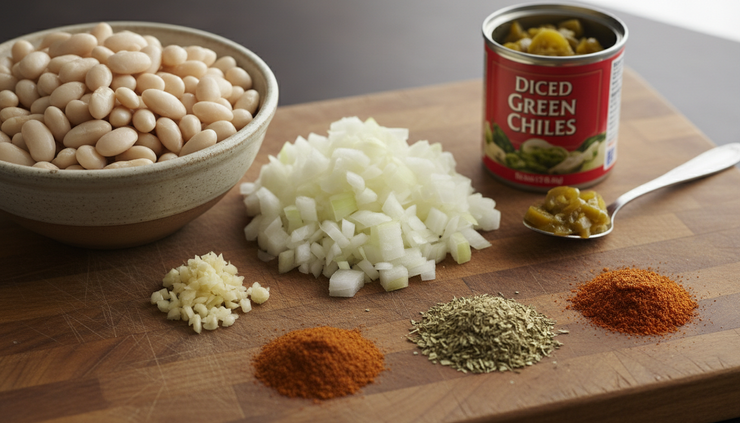
Olive oil | 1 tablespoon | Helps soften the onion and bloom the spices |
Yellow onion | 1 medium, diced | Builds the savory base |
Garlic | 4 cloves, minced | Adds depth and aroma |
Ground cumin | 2 teaspoons | Gives the chili its warm, earthy flavor |
Dried oregano | 1 teaspoon | Adds a savory herbal note |
Smoked paprika | 1/2 teaspoon | Adds gentle smokiness without red chili heaviness |
Ground coriander | 1/2 teaspoon | Adds citrusy warmth |
Cayenne pepper | 1/8 to 1/4 teaspoon | Optional heat |
Boneless, skinless chicken breasts or thighs | 1 1/2 pounds | The main protein |
Low-sodium chicken broth | 4 cups | Creates the base and controls salt better |
Canned diced green chiles | Two 4-ounce cans | Adds mild chile flavor |
Great northern beans or Cannellini beans | Three 15-ounce cans, drained and rinsed | Adds fiber, protein, and body |
Frozen corn | 1 cup | Adds sweetness and texture |
Cream cheese | 4 ounces, softened | Makes the chili creamy |
Fresh lime juice | 1 to 2 tablespoons | Brightens the final flavor |
Kosher salt | 1 to 1 1/2 teaspoons, to taste | Seasons the pot |
Black pepper | 1/2 teaspoon | Adds mild heat |
Fresh cilantro | 1/4 cup, chopped | Optional fresh finish |
If using chicken thighs, the chili will taste a little richer. If using chicken breasts, it will be leaner and slightly firmer. Both work well.
Step 1. Build the flavor base
Warm the olive oil in a large pot over medium heat. Add the diced onion and cook for 5 to 6 minutes, stirring now and then, until it softens.
Add the garlic, cumin, oregano, smoked paprika, coriander, and cayenne if using. Cook for about 30 seconds. The spices should smell fragrant, but they should not burn.
This short step matters. Heating spices in oil helps pull out their fat-soluble flavor compounds. That gives the chili a fuller taste than simply stirring dry spices into broth.
Step 2. Simmer the chicken
Add the chicken, broth, green chiles, 2 cans of the beans, salt, and black pepper. Bring the pot to a gentle boil, then reduce the heat so it simmers.
Cover and cook for 18 to 22 minutes, or until the chicken reaches 165°F in the thickest part.
The USDA recommends cooking poultry to a minimum internal temperature of 165°F for food safety. A digital thermometer is the simplest way to check without overcooking the chicken.
Transfer the cooked chicken to a plate and let it rest for 5 minutes. Shred it with two forks.
Step 3. Thicken the chili
While the chicken rests, mash the remaining can of beans with a fork or potato masher. Stir the mashed beans into the pot.
This is the easiest way to thicken white chicken chili without adding much extra fat. Beans contain starch, which helps give the broth a creamy texture.
Add the shredded chicken back to the pot. Stir in the frozen corn and simmer for 5 minutes.
Step 4. Add the creamy finish
Lower the heat. Add the softened cream cheese in small pieces and stir until smooth.
Do not boil the chili hard after adding dairy. Gentle heat helps the cream cheese melt evenly and keeps the texture from turning grainy.
Stir in lime juice. Taste and adjust salt, pepper, and cayenne.
The lime juice is not optional if you want the best flavor. Creamy soups need acid. Lime makes the chicken, beans, and chiles taste brighter.
Step 5. Serve with toppings
Ladle the chili into bowls and add toppings. Good choices include:
Chopped cilantro
Sliced scallions
Diced avocado
Crushed tortilla chips
Jalapeño slices
Extra lime wedges
Plain Greek yogurt
Shredded Monterey Jack cheese
Use toppings with contrast. A creamy chili tastes better with something crunchy, something fresh, and something acidic.
Why white chicken chili can be healthier than red chili
White chicken chili can be healthier than red chili, but the details matter. A bowl made with lean chicken, beans, broth, vegetables, and a modest amount of dairy is usually lighter in saturated fat than a bowl built around higher-fat ground beef and lots of cheese.
That does not mean red chili is unhealthy. Red chili made with lean beef, turkey, beans, tomatoes, and vegetables can be a very nutritious meal. The healthier choice depends on the recipe.
Still, white chicken chili has several built-in advantages.
Lean chicken can lower saturated fat
Boneless, skinless chicken breast is a lean protein. Skinless chicken thighs have more fat than breast meat, but they are still often leaner than higher-fat ground beef.
Saturated fat is the key point. The Dietary Guidelines for Americans recommend limiting saturated fat to less than 10 percent of daily calories. Many red chili recipes use 80/20 ground beef, sausage, bacon, or large amounts of cheese, which can raise saturated fat quickly.
White chicken chili tends to start with poultry and broth instead. If you use chicken breast and keep the creamy ingredients moderate, the bowl stays rich without relying on a lot of saturated fat.
A simple swap can make a real difference:
Chili choice | What tends to change |
Ground beef chili with full-fat toppings | Often higher in saturated fat, especially with cheese and sour cream |
White chicken chili with beans and Greek yogurt | Often higher in lean protein and lower in saturated fat |
Red chili with lean beef or ground turkey and extra beans | Can also be a balanced, healthy choice |
The point is not that one color of chili is always better. The point is that your ingredient choices drive the nutrition.
Beans add fiber and staying power
White chicken chili usually includes white beans, such as cannellini, navy, or great northern beans. Beans provide plant-based protein, complex carbohydrates, and dietary fiber.
Fiber helps make meals more filling. It also supports digestive health. According to the USDA’s MyPlate guidance, beans count as a plant protein food and can also contribute to vegetable intake because of their nutrient profile.
That is one reason chili can be so satisfying. It combines protein from chicken with fiber from beans. You get a bowl that feels substantial without needing a large portion of meat.
For more fiber, use all three cans of beans and mash one can to thicken the broth. For a lower-carb version, use two cans instead of three and add diced zucchini, cauliflower, or extra peppers.
Broth-based does not have to mean thin
A common concern with lighter soups is that they taste watery. White chicken chili avoids that problem because beans thicken the broth naturally.
Mashing beans is a useful technique because it adds body without a flour roux or heavy cream. You can also blend 1 cup of the chili and stir it back into the pot. That creates a creamy texture while keeping the ingredient list simple.
If you want a richer version, add cream cheese, half-and-half, or shredded cheese. If you want a lighter version, use plain Greek yogurt at the end. Greek yogurt adds tang and protein, but it should be stirred in off the heat to reduce the chance of curdling.
It makes vegetables easy to add
White chicken chili can carry more vegetables than many people expect. Mild vegetables fit especially well because they do not fight the green chile flavor.
Good add-ins include:
Diced zucchini
Chopped poblano peppers
Diced celery
Frozen cauliflower rice
Baby spinach
Roasted corn
Chopped kale
Add firm vegetables with the onions. Add tender greens at the end so they wilt without overcooking.
This is another place where white chicken chili can pull ahead of heavier red chili recipes. More vegetables add volume, color, and nutrients without making the bowl feel like a salad.

When is a good time to make white chicken chili
White chicken chili is useful year-round, but it fits some moments especially well. The best time to make it is when you need a meal that is comforting, flexible, and easy to reheat.
Cold nights and rainy weekends
Chili is classic cold-weather food because it holds heat well and feels substantial. White chicken chili brings the same comfort as red chili, but its lighter flavor makes it less heavy.
It works well for a Sunday afternoon meal because it can simmer while other things happen in the kitchen. It also makes the house smell like garlic, cumin, and roasted chiles, which is a practical bonus.
Busy weeknights
This recipe can be ready in about 45 minutes, and much of that time is hands-off simmering. If you use rotisserie chicken, it gets even faster.
For a rotisserie chicken version, follow the recipe through the spice step. Add broth, green chiles, beans, and corn. Simmer for 15 minutes, then stir in about 3 cups of shredded cooked chicken. Finish with cream cheese and lime juice.
That method can bring dinner to the table in about 25 minutes.
Meal prep days
White chicken chili stores well, which makes it reliable for meal prep. The flavor improves after a night in the refrigerator as the spices settle and the beans absorb the broth.
Store it in airtight containers for up to 4 days in the refrigerator. Reheat gently on the stove or in the microwave. Add a splash of broth or water if it thickens too much.
For freezing, leave out the cream cheese if possible. Dairy can separate after freezing and thawing. Freeze the chili before the creamy finish, then add cream cheese or Greek yogurt when reheating.
If freezing leftovers that already include cream cheese, they are still safe to freeze, but the texture may look slightly grainy. Stirring well while reheating helps.
Game day and casual gatherings
White chicken chili is a good party food because it holds well in a slow cooker on the warm setting. People can serve themselves and add toppings.
For gatherings, keep the pot mild and set out spicy toppings:
Hot sauce
Pickled jalapeños
Fresh jalapeños
Crushed red pepper
Pepper Jack cheese
That way, one pot works for different heat preferences.
After holidays or heavy meals
After a holiday weekend, many people want food that still feels cozy but has more protein and fiber than leftovers built around bread, casseroles, or sweets. White chicken chili fits that gap.
It is also a good use for leftover cooked chicken or turkey. After Thanksgiving, swap shredded turkey for chicken and use turkey broth if you have it.
What white chicken chili pairs well with
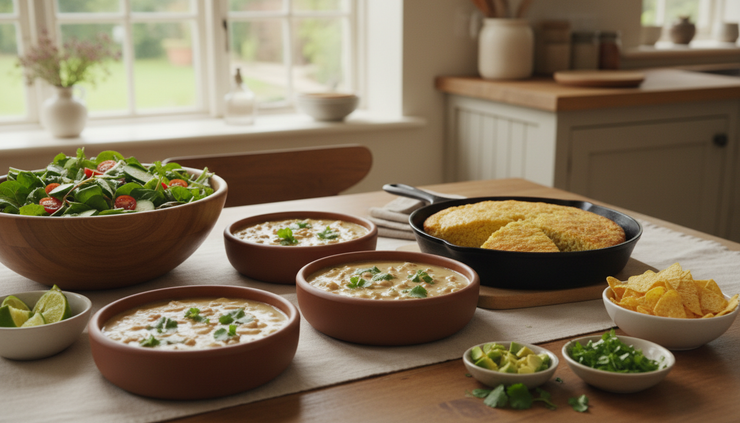
White chicken chili pairs best with sides that bring crunch, freshness, acid, or a little sweetness. Because the chili is creamy and savory, the best pairings balance that texture.
Cornbread is the classic choice
Cornbread works because its sweetness contrasts with the green chiles and cumin. It also gives you something sturdy for scooping.
For a lighter plate, serve small squares of cornbread with a crisp salad. For a richer meal, serve warm cornbread with honey butter.
Jalapeño cornbread is especially good if the chili is mild. If the chili is already spicy, plain buttermilk cornbread keeps the meal balanced.
Tortilla chips add needed crunch
A creamy bowl benefits from crunch. Tortilla chips, tostadas, or baked tortilla strips all work.
Crush chips over the top right before eating. If they sit too long, they soften. That is not always bad, but the contrast is better when they are crisp.
For a homemade option, cut corn tortillas into strips, brush with oil, sprinkle with salt, and bake until crisp.
Rice turns it into a bigger meal
White chicken chili over rice makes a filling dinner, especially for active days or larger appetites. White rice keeps the flavor simple. Brown rice adds chew and more fiber.
Cilantro-lime rice is one of the best matches. The lime echoes the chili’s finish, and the cilantro adds freshness.
If you want a lower-carb base, use cauliflower rice. Add it to the bowl first, then ladle the chili on top.
Salad keeps the meal fresh
A crunchy salad balances the creamy texture of the chili. Choose bright, acidic dressings rather than heavy creamy ones.
Good salad pairings include:
Romaine with lime vinaigrette
Cabbage slaw with cilantro and apple cider vinegar
Avocado and tomato salad
Radish and cucumber salad
Simple green salad with pepitas
Cabbage slaw is especially useful because it holds up well if you are serving chili for a crowd.
Roasted vegetables add color
White chicken chili is pale by nature. Roasted vegetables add color, texture, and a slightly sweet edge.
Good options include roasted sweet potatoes, carrots, Brussels sprouts, bell peppers, or cauliflower.
Sweet potatoes are one of the best pairings. Their natural sweetness works with cumin and green chiles, and they make the meal feel complete without bread.
Toppings can act like side dishes
The right toppings can do the work of a side dish, especially on a weeknight.
Use a mix from these groups:
Texture or flavor | Good choices |
Crunch | Tortilla chips, pepitas, crispy tortilla strips, radishes |
Creaminess | Avocado, Greek yogurt, sour cream, Monterey Jack |
Freshness | Cilantro, scallions, lime wedges, shredded cabbage |
Heat | Jalapeños, hot sauce, cayenne, Pepper Jack |
Sweetness | Corn, roasted sweet potato, mango salsa |
A bowl with avocado, crushed tortilla chips, cilantro, and lime may not need much else.
Smart variations for different needs
Once you know the basic method, white chicken chili is easy to adjust. Keep the same structure, aromatics, spices, protein, beans, broth, creamy finish, and acid, then change the details.
Make it lighter
Use chicken breast, low-sodium broth, and reduced-fat cream cheese, or skip the cream cheese and mash extra beans.
Plain Greek yogurt also works well. Stir it in after turning off the heat. This keeps the yogurt smoother and gives the chili a tangy finish.
A lighter bowl can still taste rich if you build flavor early with onion, garlic, cumin, oregano, and green chiles.
Make it dairy-free
Skip the cream cheese. Mash one can of beans and blend another cup of the chili before returning it to the pot.
For extra richness, stir in a splash of unsweetened coconut milk. It will add a mild coconut note, so use it only if that flavor sounds good. Another option is a spoonful of cashew cream.
Make it spicier
Add one diced jalapeño with the onion, use hot green chiles, or increase the cayenne. Roasted poblanos also work well because they add flavor more than sharp heat.
If cooking for a group, keep the pot mild and serve heat on the side. That gives everyone control.
Make it in a slow cooker
Add the onion, garlic, spices, chicken, broth, green chiles, and 2 cans of beans to the slow cooker. Cook on low for 4 to 6 hours, or until the chicken reaches 165°F and shreds easily.
Shred the chicken, mash the remaining beans, and stir them in with the corn. Cook for 15 to 20 more minutes. Add cream cheese at the end and stir until smooth.
For better flavor, sauté the onion, garlic, and spices before adding them to the slow cooker. This step is optional, but it makes a noticeable difference.
Make it with leftover turkey
Leftover turkey works almost exactly like cooked chicken. Add it near the end so it warms through without drying out.
This version is especially good with extra lime and cilantro because turkey has a stronger flavor than chicken.
How to store and reheat it safely
Chili is one of the best leftover meals, but it still needs proper storage.
Let the chili cool enough that it is not steaming heavily, then refrigerate it in shallow airtight containers. Shallow containers help it cool faster than one deep pot.
Use refrigerated leftovers within 4 days. For longer storage, freeze in meal-size portions.
When reheating, warm the chili to 165°F. Stir often so it heats evenly. If it has thickened in the refrigerator, add broth, water, or a splash of milk.
Do not reheat the whole batch several times. Reheat only what you plan to eat. This protects texture and reduces food-safety risk.
The takeaway
White chicken chili earns a place in the regular dinner rotation because it is practical, flexible, and satisfying. It gives you the comfort of chili with a lighter base, especially when made with lean chicken, beans, broth, and a modest creamy finish.
Choose it on cold nights, busy weeknights, game days, meal prep days, or any time you want a bowl that reheats well. Serve it with cornbread, tortilla chips, rice, salad, roasted vegetables, or plenty of fresh toppings.
The healthiest version is not the plainest one. It is the one that balances flavor and nutrition: lean protein, fiber-rich beans, enough spice, a bright squeeze of lime, and sides that add crunch and freshness.


Comments