


The Space Between Strokes: Designing an Intentional Art Studio Lounging Sanctuary

In our previous exploration of studio design, we meticulously mapped out the physical mechanics of the working environment—the deliberate zoning of wet and dry materials, the preservation of fine paper stock, and the mechanical advantages of capturing steady, north-facing daylight over the easel. Yet, any practicing artist who has committed to a slow, deliberate creative life understands that a sustainable studio is much more than a collection of utilitarian workbenches and pristine storage bins. Art is not born solely from the feverish, uninterrupted scraping of graphite or the continuous sweep of an oil brush against linen. Rather, it is born in the quiet, essential intervals between those marks—the moments spent sitting back, letting the hands rest, and allowing the eyes to perceive the canvas with unhurried clarity.
If a creative workspace contains only a rigid stool and a hard drafting table, it inadvertently forces the creative process into a linear, assembly-line mentality. This setup creates a psychological pressure to continuously produce, which is the quickest way to flatline artistic intuition. Inspiration requires room to breathe, to linger, and to incubate in the dark corners of the mind. To protect your creative spirit from exhaustion, your studio must feature a dedicated lounging sanctuary. This is an intentional space entirely separate from the active zone of production, designed specifically to romance the subconscious mind, welcome physical rest, and invite deep, contemplative reflection. Let us look at how to curate a soulful, atmospheric corner within your studio walls, turning the act of stepping back into a beautiful, productive ritual.

I. The Psychological Blueprint: Rest as an Active Creative Force
Western culture frequently mischaracterizes rest as a passive state—a lazy absence of work or a reward to be claimed only after complete exhaustion has set in. But in the life of an artist, rest is an active, vital force. When you stand inches away from a canvas or a sketching block for hours, your brain becomes overly focused on microscopic details. You lose your sense of scale, your value relationships begin to blur, and the internal critic begins to dominate your thoughts. If you stay at the easel too long during these blocks, you risk overworking a piece, destroying its delicate values, and draining the life right out of your compositions.
Stepping away from the workbench and sliding into a lounge chair is not an act of surrender; it is a vital shift in your cognitive perspective. When you physically alter your posture from a tense, forward-leaning stance to a relaxed, reclined position, your autonomic nervous system shifts out of active focus and into default mode network processing. This is the exact mental landscape where disparate ideas find their connections, where a stubborn compositional problem suddenly resolves itself, and where the creative juices begin to flow effortlessly again. By building an elegant, comfortable lounge area directly inside your studio, you grant your soul permission to shift seamlessly between the active masculine force of mark-making and the receptive feminine force of quiet observation.
II. The Anchoring Frame: Luxurious Comfort and Historical Weight
The foundation of a proper studio lounge corner must be a physical anchor that instantly invites your body to let go of its structural defenses. This area should feel separate from the modern, minimalist aesthetic that dominates commercial workspaces. Instead, look for heavy, substantial furniture pieces that carry a sense of historical weight and timeless luxury.
       Vintage Audio Hearth
• Wrensilva M1 Console / Record Player
• Row of vinyl jackets — Armstrong and Simone

↓

Comfort Anchor
• Deep blackberry / wine velvet sofa
• Weathered leather armchair

↓

Moody Light Path
• Amber beeswax candles and soft shadows
• Low green-glass banker’s lamp
The Velvet Sofa
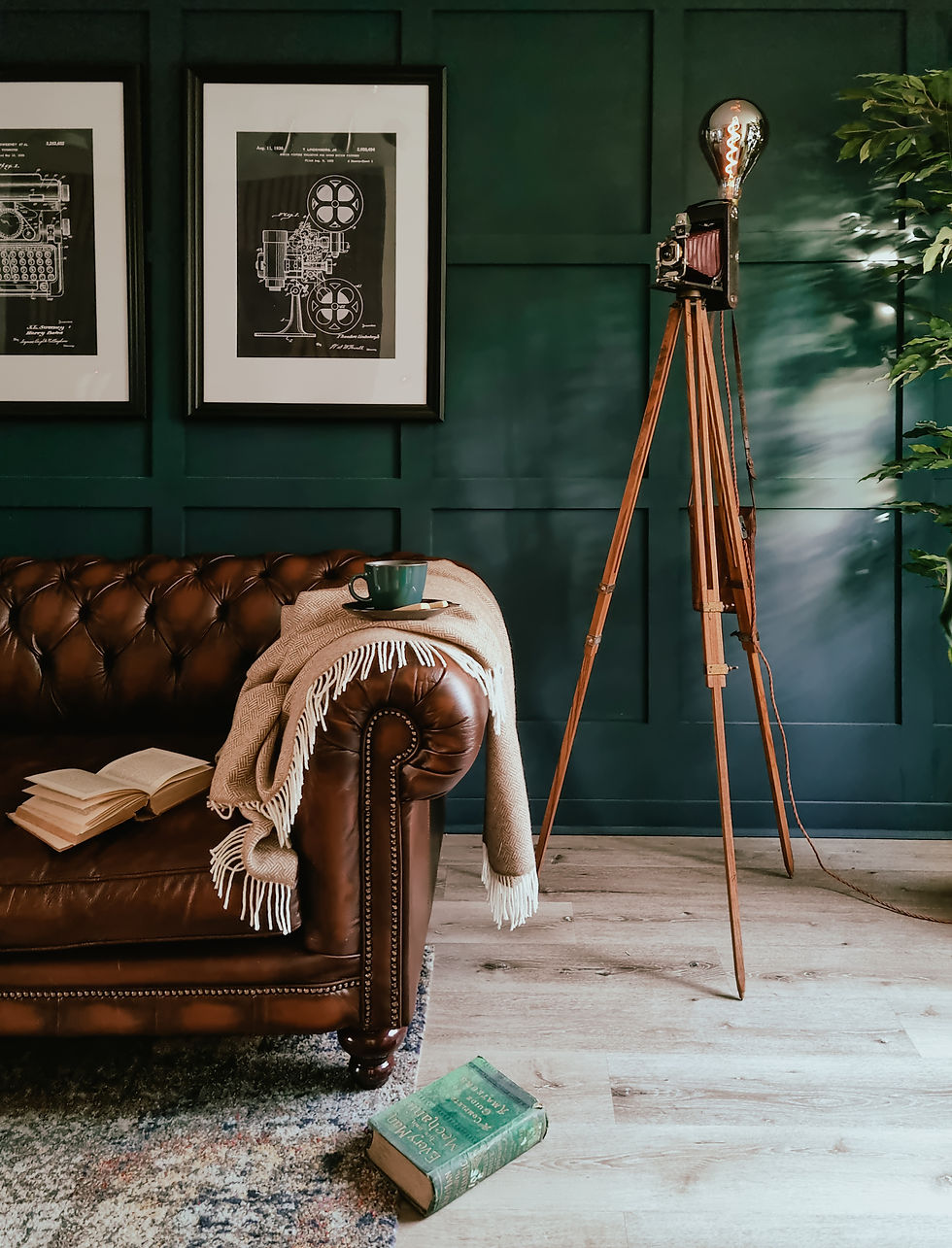
Position a deep, plush velvet sofa as the literal centerpiece of your resting zone. Velvet is an extraordinary textile for an art studio; its rich nap absorbs light rather than reflecting it, creating a deep, painterly texture right in the room. Opt for deep, sophisticated shades that mimic the dark academia palette—a dramatic wine, a concentrated blackberry, or a luxurious, velvety hunter green. This couch should be deep enough to allow you to tuck your feet up, lean back against the armrest, and look at your workspace from an entirely relaxed vantage point.
The Weathered Armchair
Complement the softness of the sofa with a substantial, weathered leather armchair Search Activities. Leather introduces a magnificent organic texture that ages beautifully over time, catching stray smudges of graphite or paint like a badge of honor. Choose a wide, high-backed design that cradles your shoulders, offering a sense of absolute enclosure and safety.
Layering the Senses
To heighten the comfort of these seating options, layer them with heavy, tactile textiles. Drape a substantial wool or heavy knit blanket over the back of the sofa, and pile on deep linen cushions in earthy tones like charcoal, moss, and warm sage. These layers do more than just complete the room's aesthetic; as your physical body rests and your circulation slows, a heavy blanket provides the necessary warmth to keep your muscles loose and comfortable, preventing the physical stiffness that often follows hours of standing at an easel.
Ill. The Chiaroscuro of Reflective Light
When you choose to step away from the active workbench, your visual environment must transition as well. While the technical drawing table requires bright, clean daylight to ensure precise value matching, the lounging area demands a rich, dramatic chiaroscuro—the conscious, beautiful interplay between deep, velvety shadows and warm, concentrated golden light. Bright, unyielding overhead light forces the pupils to contract and keeps the brain in a state of high analytical vigilance. To let your imagination expand, you must dim your horizons.
Turn off all stark overhead fixtures and let the outer corners of your lounging space dissolve into soft, welcoming shadows. This reduction in ambient light instantly eliminates external visual distractions, drawing your focus exclusively inward. To illuminate your resting corner, introduce low-placed, warm-spectrum light sources that sit below eye level:
The Classical Banker’s Lamp: Place a traditional brass banker’s lamp with a deep emerald-green glass shade on a low side table next to your armchair. The green glass filters a soft, comforting ambient glow into the room while casting a warm, highly focused pool of light directly onto your lap—perfect for holding a small leather-bound sketchbook or an annotated edition of classic literature.
The Living Flame: Light three or four pure soy candles on a tray. The natural, organic movement of a living flame introduces a soft, hypnotic rhythm to the room that artificial bulbs cannot replicate. As the soy warms, it releases a subtle, sweet scent of honey and pollen that purifies the air and deepens your breathing.
The Amber Horizon: If you have a salt lamp or a small brass reading sconce, turn it on to cast a deep amber wash across the immediate wall. By lowering the color temperature of your lighting, you signal to your nervous system that the high-output pressure of the day has ended, allowing your eyes to rest and recover their depth perception.
lV. The Audio Hearth: Music as an Auditory Shield
Sound is a powerful tool for shaping the psychological atmosphere of a room. In a home studio, external domestic noises—the distant hum of household appliances, footsteps, or the voices of a full home—can easily pull an artist out of their creative trance. Your lounging corner should feature a dedicated audio hearth: a high-quality console stereo, such as a vintage hi-fi record player, positioned within arm's reach of your sofa.
There is a gorgeous, slow-living mindfulness to the ritual of vinyl records. The intentional act of sliding a heavy wax disc out of its paper sleeve, wiping away the dust, and gently lowering the diamond needle into the groove forces you to slow your movements. It turns the simple act of listening to music from background noise into a deliberate, ceremonial event.
Active easel work → Mental fatigue → Pour warm tea and step back
↓
Sit on velvet studio sofa
↓
Spin an analog vinyl record

Benefits
• Visual distance: Spot compositional errors
• Analog audio: Calms the analytical brain
• Low chiaroscuro: Relieves eyestrain
For a studio designed to keep the creative energy flowing, fill your record crates with soulful, timeless voices that carry immense emotional depth and historical texture. Let the warm, analog crackle of a 1940s jazz record wrap your lounge corner in a protective auditory shield:
The Velvet Raspy Voice: Put on a classic album by Louis Armstrong. His rich, low, and unmistakable raspy voice carries an effortless warmth that instantly grounds a room, cutting through internal anxiety and filling the space with comfort.
The Haunting Depths: Spin a record by Nina Simone. Her classical piano styling and raw, unmatched emotional depth challenge your soul to explore deeper, more complex emotional territory in your own art.
The Masters of Melody: Keep selections from Ella Fitzgerald, Frank Sinatra, and Nat King Cole nearby. Their flawless phrasing and sophisticated orchestral backings provide a smooth, elegant soundscape that allows your thoughts to drift, wander, and organize themselves without analytical effort.

V. Curation of the Reflective Vista
When you are resting on your studio sofa, what your eyes rest upon matters immensely. This lounging corner should not face a blank wall or a pile of discarded shipping boxes. Instead, it should look directly across the room toward your active easel or drafting table. This creates a reflective vista, allowing you to observe your current art project from a safe, comfortable distance.
Looking at an unfinished painting or graphite drawing from six to ten feet away, under the soft, low-spectrum light of your lounge corner, changes your entire relationship with the piece. From this perspective, the sharp details melt away, revealing the true underlying abstract structure of the composition. You will instantly notice if your large-scale value relationships are correct, if your shadows are deep enough, or if a specific line is pulling the viewer’s eye entirely out of the frame.
To enhance this view, surround your sofa with inspiring objects that celebrate your creative lineage. Hang framed film stills from classic 1940s cinema, place heavy art history books on a rustic oak coffee table, and keep jars of natural charcoal sticks and raw French pastels within your line of sight. These objects act as visual talismans, reminding you of the grand artistic tradition you are participating in every time you pick up your tools.
VII. Conclusion: The Sacred Rhythm of the Studio
Ultimately, establishing an intentional lounging corner within your art studio is a profound commitment to a sustainable, lifelong creative practice. It is a declaration that you value the health of your creative spirit just as much as the final output on the canvas. An artist's life cannot be lived in a state of constant, aggressive execution. True mastery requires a rhythmic cadence—a beautiful, fluid dance between the active stroke of the pencil and the quiet shadow of reflection.
The next time you feel stuck at your desk, when a composition refuses to balance or your hand grows weary, do not attempt to force the work through sheer willpower. Instead, honor the transition. Pour a hot mug of tea, step away from the workbench, and slide into the deep comfort of your velvet sofa. Put on a beautiful old jazz record, let the candles flicker in the soft shadows, and simply sit with your creation from afar. It is within these exact, unhurried spaces of rest that your creative vision clarifies, your intuition returns, and the real magic of your art is reborn. Unto our next slow chat at the virtual table—keep watch over your creative fire, be gentle with your process, and blessed be.


Comments