


Soft Chewy Gluten Free Oatmeal Raisin Cookies Recipe

Disclosure: This article contains affiliate links. If you click on one of these links and make a purchase, I may earn a small commission at no additional cost to you.
A good oatmeal raisin cookie should bend before it breaks. The edges should be lightly golden, the center should stay soft, and the raisins should taste juicy instead of dry and chewy in the wrong way.
Gluten-free baking can make that harder, but not because the cookie has to be complicated. The two big moves are simple: use certified gluten-free oats and a reliable 1:1 gluten-free baking flour blend. Oats are naturally gluten-free, but they’re often processed near wheat, barley, or rye. The FDA allows foods labeled gluten-free to contain less than 20 parts per million gluten, which is why certified oats matter if you’re baking for someone who needs to avoid gluten.
This recipe keeps the classic oatmeal raisin cookie feel: buttery dough, warm cinnamon, brown sugar, soft centers, and chewy oats. It makes about 32 cookies, so it’s a solid batch for a weekend bake, cookie swap, lunchbox treat, or freezer stash.

Why these gluten-free oatmeal raisin cookies work
Oatmeal raisin cookies depend on texture more than almost any other cookie. A chocolate chip cookie can get away with being crisp. A sugar cookie can lean tender. But oatmeal raisin cookies need that middle ground: chewy, soft, and just sturdy enough to hold together.
That’s where the ingredient balance matters.
Rolled oats give chew.
Use gluten-free rolled oats, not quick oats if you can help it. Rolled oats keep more structure, which gives the cookies their classic bite. Quick oats absorb moisture faster and can make the dough feel pasty.
A 1:1 flour blend keeps the cookie simple.
Blends like Bob’s Red Mill Gluten Free 1-to-1 Baking Flour or Cup4Cup are made to replace all-purpose flour in many standard recipes. They usually include rice flour, starches, and a binder such as xanthan gum. That binder helps mimic some of the structure gluten would normally provide.
Brown sugar helps create chew.
Brown sugar contains molasses, which adds moisture and a deeper flavor. Using both granulated sugar and brown sugar gives you a cookie that spreads nicely but still stays soft in the middle.
Butter adds classic flavor.
Room-temperature butter creams well with sugar. That step traps air in the dough, which helps the cookies bake up lighter instead of dense.
One more thing helps a lot: resting the dough for 20 to 30 minutes. Gluten-free flour blends often need a little time to fully hydrate. Without that rest, some cookies can taste slightly gritty. A short chill gives the flour and oats time to absorb moisture before baking.
Equipment You’ll Need
Ingredients you’ll need
This recipe uses everyday baking ingredients, with two gluten-free details that really matter: certified oats and a balanced baking blend.
Ingredient | Amount | Notes |
Gluten-free 1:1 baking flour | 1 cup | Bob’s Red Mill, Measure for Measure, or Cup4Cup are common options |
Gluten-free rolled oats | 2 cups | |
Unsalted butter | 1/2 cup | Room temperature |
Granulated cane sugar | 1/2 cup | Helps with spread and crisp edges |
1/2 cup, packed | Adds moisture and chew | |
Large eggs | 2 | Add one at a time |
Vanilla extract | 1 teaspoon | Rounds out the flavor |
Ground cinnamon | 1 teaspoon | Classic oatmeal cookie warmth |
1 teaspoon | Helps lift | |
1 teaspoon | Helps browning and spread | |
Sea salt | 1/2 teaspoon | Balances sweetness |
1 cup | Plump them for the best texture |
Recipe overview
Prep time: 15 minutes
Cook time: 10 to 12 minutes
Yield: About 32 cookies
Texture: Soft, chewy centers with lightly golden edges
Oven temperature: 375°F
A quick note on flour: don’t use a single-ingredient flour, such as almond flour, coconut flour, or plain rice flour, as a direct swap here. Those flours behave very differently. Coconut flour, for example, absorbs a lot of liquid and would dry out the dough fast. A 1:1 blend is the safer choice for this style of cookie.
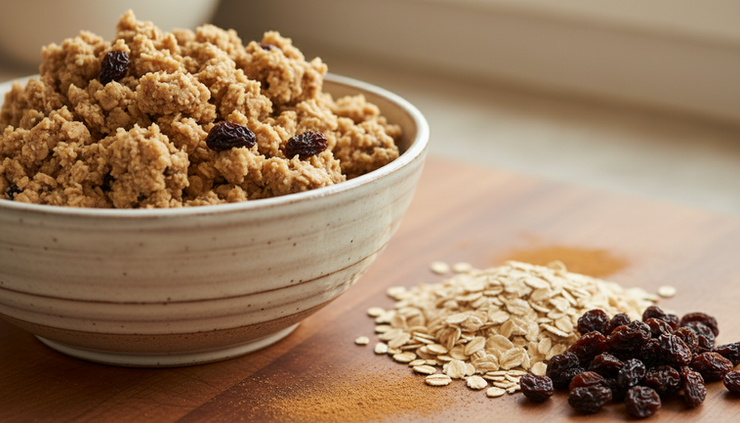
How to make soft chewy gluten-free oatmeal raisin cookies
This dough comes together like a traditional oatmeal cookie dough. The key is to mix it enough to combine, then stop before you overwork it.
Preheat the oven and prep the pans
Heat your oven to 375°F. Line two large baking sheets with parchment paper.
Parchment helps the cookies release cleanly and limits over-browning on the bottoms. If you bake directly on a dark baking sheet, keep a close eye on the first batch because dark pans tend to brown cookies faster.
Cream the butter and sugars
Add the room-temperature butter, granulated sugar, and packed light brown sugar to the bowl of a stand mixer. You can also use a large bowl and a hand mixer.
Beat on high speed for about 3 minutes, until the mixture looks lighter and fluffier.
This isn’t just busywork. Creaming butter and sugar creates tiny air pockets in the dough. Those air pockets help the cookies bake with a softer texture instead of turning heavy.
Add the eggs and vanilla
Add the eggs one at a time, beating after each addition. Pour in the vanilla extract and mix until smooth.
If the mixture looks a little separated after the eggs go in, don’t panic. It usually comes back together once the dry ingredients are added.
Whisk the dry ingredients
In a separate bowl, whisk together:
1 cup gluten-free 1:1 baking flour
2 cups gluten-free rolled oats
1 teaspoon ground cinnamon
1 teaspoon baking powder
1 teaspoon baking soda
1/2 teaspoon sea salt
Whisking matters because baking powder, baking soda, cinnamon, and salt need to be evenly spread through the dough. Nobody wants one cookie that tastes flat and another with a salty bite.
Mix the dough gently
Slowly add the dry ingredients to the wet mixture. Mix on low speed just until the visible flour patches disappear.
The dough should look soft and sticky. That’s normal. Gluten-free oatmeal cookie dough often feels a little looser at first because the oats and flour blend need time to absorb moisture.
Fold in the raisins with a spatula until they’re evenly distributed.
Scoop the cookies
Use a cookie scoop or tablespoon to drop rounded portions of dough onto the prepared baking sheets. Space them about 2 inches apart.
If you want more uniform cookies, a cookie scoop is worth using. Even scoops bake at the same rate, which means fewer overdone small cookies and underdone large ones.
Bake until the edges are golden
Bake at 375°F for 10 to 12 minutes.
Pull the cookies when the edges are lightly golden and the centers still look a bit soft. This is the moment that gives you chewy centers. If you wait until the centers look fully baked in the oven, they’ll usually be firmer once cooled.
Let them finish on the pan
Let the cookies sit on the hot baking sheets for 5 to 10 minutes before moving them to a wire rack.
That resting time lets the centers set without drying out. It’s also the reason the cookies don’t fall apart when you lift them.

Tips for the best texture
A few small steps can take these cookies from good to bakery-style soft and chewy.
Give the dough a short rest
If you have time, cover the dough and chill it in the refrigerator for 20 to 30 minutes before baking.
This helps in two ways. The gluten-free flour and oats absorb liquid, which improves the texture. The cooled butter also slows the spread a bit, so the cookies bake up thicker.
If the chilled dough feels firm, let it sit at room temperature for a few minutes before scooping.
Plump the raisins
For softer, juicier raisins, place them in a small bowl and cover them with boiling water for 10 minutes before you start the recipe.
Drain them well and pat them dry with a paper towel before folding them into the dough. This step is small, but it makes a real difference. Dry raisins can pull moisture from the cookie dough while baking. Plumped raisins bring moisture with them.
Don’t overbake
Soft cookies can look underdone when they first come out of the oven. That’s normal.
Look for these signs instead of waiting for a firm center:
Edges are lightly golden
Tops look set but still soft
Centers no longer look wet
Bottoms are lightly browned, not dark
The baking sheet keeps cooking the cookies after they leave the oven. That carryover heat is part of the recipe.
Measure flour carefully
Gluten-free flour blends can compact in the bag. For the best result, spoon the flour into your measuring cup and level it off with a straight edge. Don’t scoop directly from the bag and pack it down.
Too much flour can make the cookies dry or cakey. With gluten-free baking, that can be especially noticeable because the flour blend already absorbs moisture differently than wheat flour.
Use room-temperature butter
Room-temperature butter should be soft enough to press with a finger, but not greasy or melted.
If the butter is too cold, it won’t cream well with the sugars. If it’s too warm, the cookies may spread more than you want.
Easy variations and swaps
This recipe is flexible, as long as you keep the base dough the same.
Add walnuts or pecans
Fold in 1/2 to 3/4 cup chopped walnuts or pecans with the raisins. Nuts add crunch and a slightly toasty flavor that works well with cinnamon and brown sugar.
For even better flavor, toast the nuts first. Spread them on a baking sheet and bake at 350°F for a few minutes, just until fragrant. Let them cool before adding them to the dough.
Add shredded coconut
A small handful of shredded coconut gives the cookies extra chew. Use sweetened coconut if you want a softer, sweeter cookie. Use unsweetened coconut if you prefer less sweetness.
Try about 1/2 cup shredded coconut so it doesn’t overwhelm the oats.
Swap raisins for chocolate chips
If raisins aren’t your thing, use chocolate chips instead. Semi-sweet chocolate chips are the easiest fit because they balance the cinnamon and brown sugar.
You can also do half raisins and half chocolate chips. That gives you the classic oatmeal raisin flavor with little pockets of chocolate.
Make them extra spiced
Cinnamon is the classic choice, but you can add a pinch of nutmeg or ginger if you like a warmer spice flavor.
Go light. Oatmeal cookies can handle spice, but too much nutmeg can take over fast.

How to store and freeze them
Once the cookies cool completely, store them in an airtight container at room temperature. They’re best within the first few days, when the centers are still soft and the oats have a nice chew.
To help keep them soft, you can place a small piece of sandwich bread in the container. The cookies absorb a little moisture from the bread over time. Replace the bread if it gets dry.
For longer storage, freeze the baked cookies:
Let the cookies cool completely.
Place them in a single layer on a baking sheet.
Freeze until firm.
Transfer to a freezer-safe bag or container.
Freezing them individually first keeps them from sticking together. When you want one, let it thaw at room temperature or warm it briefly in the microwave.
You can also freeze the dough. Scoop the dough onto a parchment-lined baking sheet and freeze until solid. Move the frozen dough balls to a freezer bag. Bake from frozen, adding a minute or two as needed.
The soft cookie takeaway
The best gluten-free oatmeal raisin cookies don’t need a long ingredient list or tricky method. They need the right oats, a good 1:1 flour blend, proper mixing, and a little patience.
Use certified gluten-free rolled oats for safety and texture. Let the dough rest if you can. Pull the cookies when the edges are golden and the centers still look soft. Then give them a few quiet minutes on the baking sheet so they can finish setting.
That’s how you get the cookie everyone wants: chewy in the middle, lightly crisp at the edge, full of cinnamon, and soft enough to make a second one feel completely reasonable.


Comments