


Maximize Your Fitness: The Benefits of Incorporating Body Weight Workouts into Your Routine
- Baylin Bruell
- 10 minutes ago
- 12 min read

Starting a fitness routine can be daunting, especially with the overwhelming array of complex equipment, intricate machines, or costly gym memberships that often accompany traditional workout programs. Many individuals feel intimidated by the prospect of navigating a gym environment or investing substantial sums into fitness-related expenses. However, body weight workouts emerge as a simple yet highly effective alternative that can be performed virtually anywhere, requiring no specialized equipment or financial commitment. These workouts allow individuals to build strength, improve balance, and increase mobility using only their own body weight as resistance, making them accessible and adaptable to all fitness levels, from beginners to seasoned athletes.
Throughout the years, I have focused on body weight exercises in my fitness regimen, enhancing my strength and overall fitness. Utilizing my body weight as resistance helps me work on various muscle groups without the need for costly gym equipment. The simplicity of these workouts allows me to maintain fitness anywhere. Prioritizing mobility and balance is crucial for my health. Mobility exercises help prevent injuries and maintain flexibility, supporting daily activities and minimizing strain risks. Balance exercises boost stability and coordination, improving posture and body awareness with movements like single-leg stands and dynamic lunges.
Body weight exercises harness the natural weight of your body to perform movements that engage multiple muscle groups simultaneously. This approach not only builds strength but also enhances functional fitness, which is essential for everyday activities. Moreover, these exercises can be easily modified to suit different skill levels, ensuring that everyone can participate and progress at their own pace. Whether you are looking to tone your muscles, increase endurance, or simply maintain a healthy lifestyle, body weight workouts can be tailored to meet your specific fitness goals.
This post highlights the numerous benefits of body weight exercises, emphasizing their role in enhancing strength, flexibility, and overall conditioning. Some of the key advantages include improved core stability, better posture, and increased joint mobility. Additionally, body weight workouts promote cardiovascular health, as many movements can elevate your heart rate, providing a well-rounded workout that combines strength training and aerobic exercise.
To illustrate the effectiveness of body weight workouts, we will provide specific exercises that target various muscle groups and enhance your overall fitness. These movements will include classic exercises such as push-ups, squats, lunges, and planks, as well as variations that challenge your balance and coordination. Each exercise will be accompanied by detailed instructions on proper form and technique, ensuring that you perform them safely and effectively.
By the end of this post, you will have a comprehensive understanding of how to incorporate these dynamic workouts into your daily routine. You will be equipped with the knowledge to create a balanced workout plan that aligns with your fitness goals, allowing you to achieve results efficiently. Embrace the journey of fitness with confidence, knowing that you can utilize the power of your own body to transform your health and well-being.

Why Body Weight Workouts Are Essential
Body weight workouts are a form of exercise that utilizes your own body weight as resistance, allowing you to perform a variety of movements that strengthen and tone your muscles. This type of training is incredibly versatile and can be done virtually anywhere, at any time, making it an ideal option for those with a hectic lifestyle or for individuals who are frequently on the move. The beauty of body weight exercises lies in their accessibility; you don’t need a gym membership, specialized machines, or additional weights to engage in an effective workout. Instead, you can leverage your own body to perform exercises that enhance strength, flexibility, and endurance.
The convenience of body weight workouts means you can seamlessly incorporate them into your daily routine, whether you're at home, in a hotel room while traveling, or even outdoors in a park. This flexibility allows you to maintain your fitness regimen without the constraints that often come with traditional gym settings. Moreover, body weight exercises can be easily modified to accommodate various fitness levels, from beginners to advanced athletes, making them suitable for a wide range of individuals.
Furthermore, these workouts can include a diverse array of exercises such as push-ups, squats, lunges, planks, and burpees, each targeting different muscle groups and providing a comprehensive workout experience. By varying the intensity and duration of these exercises, you can customize your workout to meet specific fitness goals, whether that be building strength, improving cardiovascular health, or increasing overall flexibility. Additionally, body weight workouts can be structured into circuits or high-intensity interval training (HIIT) formats, which can elevate your heart rate and maximize calorie burn in a short amount of time.
In essence, body weight workouts not only promote physical fitness but also foster a sense of independence and empowerment, as you can take charge of your health and wellness without relying on external equipment. This self-sufficiency is particularly beneficial for those who may feel intimidated by traditional gym environments or who simply prefer the comfort of working out in their own space. Overall, the practicality and effectiveness of body weight workouts make them an invaluable tool for anyone looking to maintain or enhance their physical fitness, regardless of their circumstances.
Best Body Weight Exercises for Results
Choosing the right exercises is key to maximizing benefits, as the effectiveness of a workout routine often hinges on the selection of movements that target multiple muscle groups, enhance cardiovascular fitness, and improve overall functional strength. When you incorporate a variety of exercises that engage different muscle groups, you not only prevent boredom but also promote balanced muscle development and reduce the risk of injury. Here are some of the most effective body weight moves to include in your routine, each designed to challenge your body in unique ways and contribute to a well-rounded fitness program:
Push-Ups
Push-ups are a classic body weight exercise that primarily targets the chest, shoulders, and triceps, while also engaging the core and lower body to a degree. By adjusting hand placement or elevating your feet, you can modify the intensity and focus of the movement. Variations such as diamond push-ups or wide grip push-ups can further diversify your routine and challenge different muscle groups.
The Setup: Get onto all fours. Place your hands flat on the floor, slightly wider than shoulder-width apart. Extend your legs straight behind you, balancing on the balls of your feet.
The Alignment: Lock your core, squeeze your glutes, and ensure your body forms a perfectly straight line from your head to your heels. Look at the floor just ahead of your hands to keep your neck neutral.
The Descent: Inhale as you slowly bend your elbows to lower your body. Keep your elbows tucked backward at roughly a 45-degree angle—do not let them flare out wide like a "T".
The Bottom: Lower yourself until your chest is just an inch or two away from the floor. Your elbows should point diagonally backward.
The Press: Exhale as you powerfully push the floor away, driving through your palms to return to the starting high plank position. Keep your hips aligned with your shoulders the entire time.
Squats
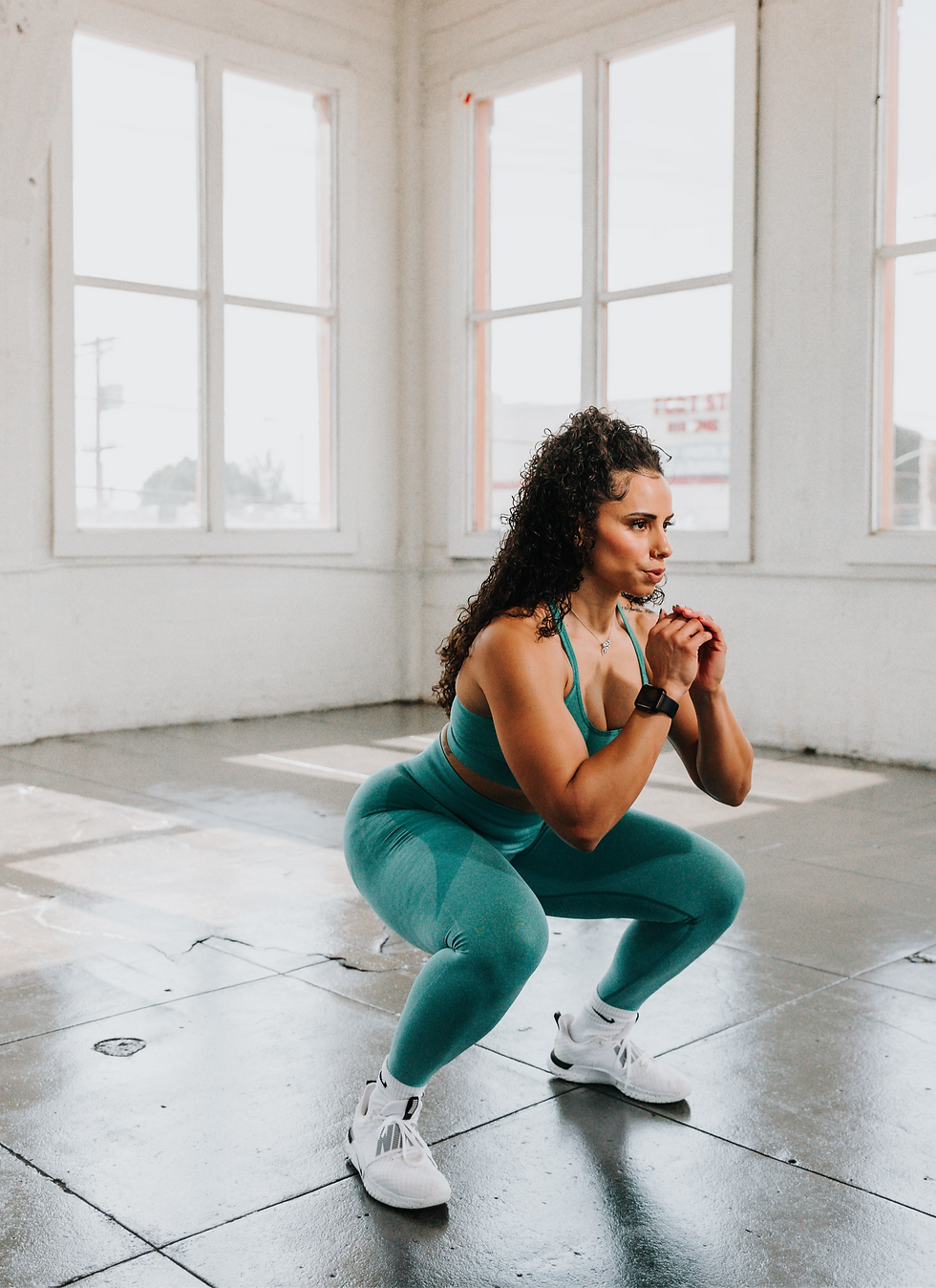
Squats are essential for building strength in the lower body, particularly in the quadriceps, hamstrings, and glutes. They also engage the core for stability. Body weight squats can be performed anywhere and can be modified into variations such as jump squats or single-leg squats to increase difficulty and add a plyometric component. Incorporating these variations can enhance power and agility over time.
The Setup: Stand tall with your feet shoulder-width apart. Point your toes slightly outward (about 5 to 15 degrees) to allow for a natural range of motion. Keep your chest up and eyes looking straight ahead.
The Descent: Inhale, brace your core, and initiate the movement by hinging at your hips and bending your knees simultaneously. Think about sitting back into an imaginary chair rather than just dropping straight down.
The Depth: Continue lowering until your thighs are at least parallel to the floor. Ensure your knees stay aligned with your toes and do not cave inward. Keep your weight distributed evenly across your feet, leaning slightly into your heels.
The Drive: Exhale as you push firmly through your feet to reverse the movement. Keep your chest proud and drive your hips straight up until you return to the starting standing position. Squeeze your glutes at the top.
Plank
The plank is a powerful isometric exercise that strengthens the core, shoulders, and back. Holding a plank position requires stability and endurance, making it an excellent choice for improving overall body strength. There are numerous variations, including side planks and plank jacks, which can be added to your routine to keep things interesting and to target different areas of the body.
The Setup: Lie face down on the floor. Place your elbows directly underneath your shoulders with your forearms flat on the ground, pointing straight ahead. Your hands can be clasped or flat on the floor.
The Lift: Tuck your toes and lift your knees and hips off the ground, raising your body until it is completely parallel to the floor.
The Alignment: Keep your neck neutral by looking at the space on the floor right between your hands. Do not look up or let your head hang down. Your body must look like a straight wooden board.
The Engagement: Actively squeeze your belly button toward your spine, tighten your thighs, and pinch your glutes. This full-body tension prevents your muscles from sagging.
Lunges
Lunges are fantastic for building strength and stability in the legs and glutes. This exercise mimics functional movements and helps improve balance. Forward lunges, reverse lunges, and lateral lunges each provide unique benefits, allowing for a comprehensive lower body workout. Adding walking lunges can also introduce a dynamic element to your routine.
The Setup: Stand tall with your feet hip-width apart, shoulders rolled back, core braced, and your hands on your hips or held together at your chest.
The Step: Take a controlled, large step forward with your right leg. As you step, keep your feet hip-width apart (like you are standing on train tracks, not a tightrope) to maintain balance.
The Descent: Lower your hips straight down toward the floor. Keep your torso upright and your weight centered. Lower yourself until your back knee is hovering just an inch or two above the ground.
The Checkpoint: At the bottom, look down. Your front knee should be tracking directly over your ankle (not pushing past your toes), and your back knee should point straight down. Both legs should form rough 90-degree angles.
The Drive: Press firmly through your front heel and midfoot, engaging your quad and glute to push yourself backward into the starting standing position. Repeat on the other side.
Burpees
Burpees are a full-body exercise that combines strength and cardio in one movement. They involve a squat, push-up, and jump, making them an efficient way to elevate your heart rate while building strength. Burpees can be modified for beginners by removing the jump or push-up, allowing anyone to gradually work up to the full movement.
The Setup: Stand tall with your feet shoulder-width or slightly wider apart, arms at your sides, and your core braced.
The Squat: Lower your hips into a squat by bending at your knees and hips. Keep your chest up and place your hands flat on the floor right in front of your feet.
The Plank Jump: Keeping your hands securely planted, jump both feet backward to land in a high plank position. Your body should form a straight line from your head to your heels.
The Push-Up: Lower your chest toward the floor, keeping your elbows tucked at about a 45-degree angle, then press yourself back up into the plank position.
The Snap Back: Jump your feet forward so they land outside of your hands. Landing with a wide stance helps protect your lower back and knees.
The Jump: Explode upward, launching yourself toward the ceiling while reaching your arms straight overhead. Land softly on the balls of your feet with slightly bent knees to absorb the impact.
Mountain Climbers
Mountain climbers are an excellent way to engage multiple muscle groups while providing a cardiovascular challenge. This exercise mimics the motion of climbing and helps improve agility, coordination, and core strength. By adjusting the speed and intensity, you can tailor mountain climbers to suit your fitness level, making them a versatile addition to any routine.
The Setup: Get into a standard high plank position. Place your hands flat on the floor directly under your shoulders, extend your legs straight behind you, and balance on the balls of your feet.
The Alignment: Look down at the floor just slightly ahead of your hands to keep your neck neutral. Engage your abs, squeeze your glutes, and lock your body into a perfectly straight line.
The Drive: Pull your right knee up toward your chest as far as you can, flexing your hip. Keep your foot hovering just above the floor rather than tapping your toes down.
The Switch: In one fluid, explosive motion, extend your right leg back to the starting plank position while simultaneously driving your left knee forward toward your chest.
The Tempo: Continue alternating legs rapidly, running in place against the floor. Focus on maintaining a fast but controlled rhythm.
Glute Bridges
Glute bridges effectively target the glutes, hamstrings, and lower back. This exercise not only helps in building strength in the posterior chain but also plays a crucial role in improving hip mobility and stability. Variations such as single-leg glute bridges can increase the challenge and further enhance muscle engagement.
The Setup: Lie face up on a mat or flat floor. Bend your knees and place your feet flat on the ground, hip-width apart. Your feet should be positioned about 6 to 8 inches away from your glutes. Relax your arms at your sides, palms flat.
The Alignment: Look straight up at the ceiling to keep your neck neutral. Before you move, brace your core and press your lower back flat against the floor to eliminate any arch in your spine.
The Lift: Exhale, press firmly through your heels, and squeeze your glutes to drive your hips straight up toward the ceiling. Avoid pushing through your toes, which shifts the work to your quads.
The Top: Lift until your hips are fully extended and your body forms a straight line from your shoulders to your knees. Hold this position for 1 to 2 seconds, giving your glutes a maximal squeeze. Do not overarch your lower back at the top.
The Descent: Inhale as you slowly and under control lower your hips back down to the starting position, letting your lower back lightly touch the floor before starting the next rep.
Incorporating these exercises into your routine can significantly enhance your fitness level, promote muscle growth, and improve overall health. By focusing on body weight movements, you can achieve a balanced workout that is both effective and adaptable to various fitness levels. Remember to listen to your body and adjust the intensity of each exercise as needed to ensure a safe and productive workout experience.
How Body Weight Exercises Improve Core Strength, Balance, and Mobility
Core Strength
Your core encompasses a complex group of muscles that are crucial for overall stability and movement. This intricate group includes not only the muscles surrounding your abdomen but also those in your lower back and pelvis, forming a comprehensive support system for your entire body. The primary muscles that constitute the core are the rectus abdominis, transverse abdominis, internal and external obliques, erector spinae, multifidus, diaphragm, and pelvic floor muscles. Each of these muscles plays a specific role in maintaining stability and facilitating movement.
Balance
Balance is essential for physical fitness, involving the coordination of the nervous system, muscles, and sensory systems. Exercises like lunges and single-leg squats improve balance by challenging stabilization, engaging multiple muscle groups, and enhancing neuromuscular coordination. Lunges strengthen leg and core muscles, while single-leg squats increase demand on stabilizing muscles and proprioception. Regular practice enhances the nervous system's response to balance shifts, preventing falls, especially with age. Improved balance boosts coordination, benefiting daily activities and sports. Incorporating dynamic movements like reaching or twisting further enhances stability. Prioritizing balance training is crucial for mobility, injury prevention, and overall physical performance.
Mobility
Mobility is defined as the ability to move joints through their full range of motion, which is a crucial aspect of overall physical health and functional movement. It encompasses not only the flexibility of muscles and tendons but also the strength and coordination of the surrounding structures that support joint function. Among the various exercises that enhance mobility, squats and glute bridges stand out as particularly effective for promoting hip and ankle mobility. These exercises encourage controlled movement in these critical joints, allowing individuals to develop both strength and flexibility simultaneously.
How to Integrate Body Weight Workouts into Your Schedule
Consistency is key to seeing results. Here’s how to make body weight workouts a regular part of your routine:
Start small: Begin with 10-15 minutes, 3 times a week.
Create a circuit: Combine 4-6 exercises and perform each for 30-45 seconds with short rests.
Increase intensity: Add more reps, sets, or reduce rest time as you get stronger.
Mix it up: Change exercises weekly to challenge different muscles.
Use proper form: Focus on technique to avoid injury and get the most benefit.
You can do these workouts at home, in a park, or while traveling. No equipment means no excuses.
Tips for Success and Avoiding Common Mistakes
Warm up before starting with light cardio or dynamic stretches.
Keep your core engaged during exercises to protect your back.
Don’t rush movements; control improves effectiveness.
Listen to your body and rest if you feel pain.
Track your progress by noting reps, sets, or hold times.

Adding body weight workouts to your fitness routine offers a practical way to build strength, improve balance, and increase mobility. These exercises require no equipment, making them accessible and flexible for any lifestyle. Start with basic moves like push-ups, squats, and planks, then gradually increase intensity and variety. Your core will get stronger, your balance will improve, and your joints will move more freely. Take the first step today by trying a short body weight circuit and feel the difference in your fitness and daily life.
Body weight workouts are a powerful and accessible way to improve your fitness, no matter your experience level or lifestyle. By incorporating exercises like push-ups, squats, planks, and lunges into your routine, you can build strength, enhance balance, and increase mobility—all without the need for expensive equipment or gym memberships. These workouts empower you to take control of your health and fitness, offering flexibility and convenience that fit seamlessly into your daily life.
Ready to take the first step toward a stronger, healthier you? Start today by trying a simple 10-minute body weight circuit using the exercises outlined in this post. Share your progress and favorite moves in the comments below, or tag us on social media to inspire others in their fitness journey. Don’t forget to subscribe to our newsletter for more tips, workout plans, and inspiration to keep you motivated. Let’s maximize your fitness together!


Comments