


Everyday Elegance in a Casual Age

Why getting dressed still matters—and how to make it feel like you.
Walk through almost any American grocery store, airport terminal, or neighborhood coffee shop on a Tuesday morning, and you will witness a quiet cultural transformation. Alongside the carts of fresh produce and morning lattes, you are almost guaranteed to see flannel pajama bottoms, oversized fleece hoodies, and fuzzy bedroom slippers worn not as an emergency dash to the mailbox, but as standard daytime attire.
In the United States today, personal style has largely become an optional hobby rather than an everyday ritual. While there are certainly still pockets of people who take genuine pleasure in dressing well, the vast majority of the culture seems to have collectively shrugged and decided that looking put-together is simply too much trouble. Comfort—defined narrowly as whatever feels closest to rolling straight out of bed—has become the sole criteria for getting dressed.
And yet, before anyone mistakes this observation for standing on a pedestal and passing judgment from across the produce aisle, I have a confession to make: I understand how easy it is to slip into that exact habit, because I caught myself doing it too.

Confessions from a Style Rut
For most of my life, getting dressed was non-negotiable. With a background in fashion design and fashion marketing, clothing was never an afterthought to me—it was an art form, a creative language, and a daily ritual of self-respect. For decades, I simply did not leave the house without putting together a thoughtful outfit, styling my hair, and sweeping on a touch of lip gloss before stepping out the front door. Even on ordinary errand days—dropping off packages, picking up groceries, or running out for a quick coffee—taking ten minutes to present myself with care felt like honoring both myself and the world I was stepping into.
Then life shifted, as it inevitably does. Somewhere between raising children, managing busy household rhythms, and waking up in a changing, 50-something body that no longer responded to the silhouettes I had relied on in my twenties and thirties, I quietly fell into a rut.
Suddenly, standing in front of my closet felt frustrating rather than inspiring. The tailored cuts I had worn effortlessly for years sat differently across my waist and shoulders; trends in stores felt either aggressively youthful or shapeless and matronly. Without realizing it, I began defaulting to the path of least resistance: reaching for the same pair of black exercise leggings and an oversized t-shirt or sweatshirt day after day. It was easy, it required zero thought, and it hid the parts of my body I wasn't quite sure how to dress anymore. There was no dramatic decision to abandon style—just a slow, subtle drift toward invisibility. Looking around at the pajama-clad shoppers in the grocery store, I realized we were all suffering from different versions of the exact same exhaustion.
From Ritual to Pajamas: A Brief History of Everyday Polish
To understand why American style has slid so far toward the bedroom, it helps to look at how quickly our cultural relationship with clothing has changed over the last eighty years.
In the 1940s and 1950s, getting dressed was treated as a basic social courtesy—a way of showing respect to the people sharing public space with you. Even for routine errands—taking a train, visiting the bank, or picking up groceries—women wore tailored wool coats, crisp cotton shirtdresses, structured leather handbags, and low-heeled shoes, while men wore pressed trousers and collared shirts. Crucially, garments during that era had architecture. They were constructed with darts, linings, interfacings, and structured seams designed to skim the body gracefully, offer gentle support, and hold their shape throughout the day.
By the 1960s, the youth revolution and pioneers of American sportswear like Claire McCardell rightly liberated women from rigid, restrictive formality. McCardell proved that clothing could be practical, fluid, and deeply comfortable—introducing wrap silhouettes, soft jersey knits, and deep functional pockets—without ever sacrificing grace or proportion. Even through the relaxed decades that followed, including the iconic tailored minimalism of the 1990s with its crisp white button-downs, straight-leg denim, structured blazers, and classic leather loafers, a clear psychological boundary remained: there were clothes you slept in, clothes you exercised in, and clothes you wore out into the world.
Over the past fifteen years, several forces collided to erase that boundary entirely. First came the explosion of fast fashion, which flooded closets with poorly constructed, disposable garments that lost their shape after two washes. When clothes are cut on cheap patterns with zero tailoring or seam allowance, getting dressed stops feeling like a pleasure and starts feeling like an uphill battle. Second came the rise of 24/7 athleisure, which convinced an entire generation that technical gym wear belonged at brunch and on airplanes. Finally, post-2020 remote work habits collapsed the divide between private domestic space and public life. Without noticing what we were losing, we traded the quiet dignity of getting dressed for the illusion of effortless comfort.
The Psychology of What We Wear: Why Getting Dressed Matters
It is easy to dismiss clothing as superficial, yet psychologists have spent years studying a
phenomenon known as enclothed cognition—the measurable shift in mood, focus, posture, and confidence that occurs simply from what we put on our bodies.
When we stay in pajamas or worn-out gym clothes all day, our brains remain subtly anchored in "off-duty" or passive mode. Our shoulders round forward, our energy stays low, and we carry a quiet, subconscious sense of hiding from the world. Conversely, putting on real clothes—garments with clean lines, natural weight, and intentional fit—creates an immediate physical and mental shift. You stand a little taller. You move with slightly more purpose. You feel prepared to meet the day rather than merely survive it.
Just as importantly, dressing with care is a form of civic grace. When we walk into a bakery, a library, or a neighborhood market looking awake and thoughtfully put together, we contribute a small measure of beauty and dignity to shared community life. Just as a well-tended front garden or a warm greeting lifts the spirit of a street, human beings dressed with intention remind one another that ordinary days are worth showing up for.
Comfort vs. Craft: Why Natural Fibers Beat Synthetic Loungewear
One of the biggest myths keeping people trapped in pajama pants and gym clothes is the idea that "stylish" automatically means stiff, pinching, or fussy. From a designer’s perspective, that false choice comes down almost entirely to fabric and construction.
Most modern fast-fashion loungewear, cheap leggings, and novelty pajama pants are spun from synthetic fibers—polyester, acrylic, and nylon blends that are essentially extruded plastics. While they may feel artificially slick on the hanger, synthetic knits trap body heat, cling awkwardly to every curve, pill after a handful of washes, and possess zero natural drape. They look sloppy because the material itself has no structural integrity or breathability.
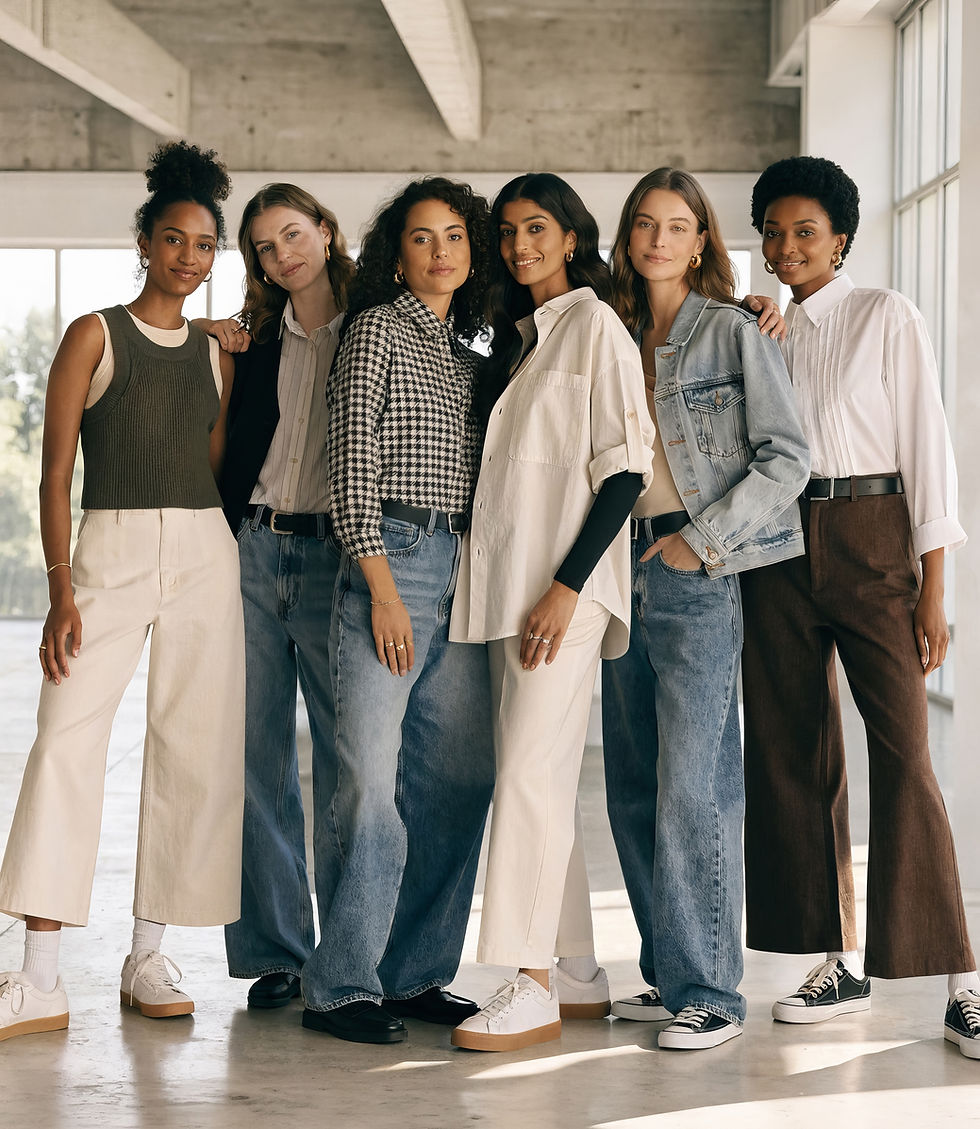
True heritage fabrics tell a completely different story. When you dress in breathable, tactile natural fibers—brushed cotton twill, fine-gauge merino wool, cashmere, washed linen, and heavyweight organic cotton—you get equal or greater physical comfort alongside natural drape, warmth, and longevity. A pair of garment-dyed cotton chino trousers or a soft merino crewneck sweater feels every bit as gentle against the skin as pajamas, yet it moves with quiet authority and holds a clean, flattering silhouette all day long.
Dressing the Next Chapter: Effortless Formulas for Real Bodies
Climbing out of a style rut—especially when your body, lifestyle, or priorities have evolved after motherhood or midlife—does not require squeezing back into twenty-year-old trends or spending hours in front of a mirror. In fact, the secret to effortless everyday polish lies in trusting clean proportions, anchoring your closet in a cohesive color palette of rich neutrals and timeless earth tones, and relying on a few forgiving outfit formulas that honor real bodies and real schedules:
The Heritage Country Formula: Pair relaxed, straight-leg cotton chinos with a soft, breathable merino crewneck sweater, a classic waxed-cotton or diamond-quilted barn jacket, and broken-in leather loafers or ankle boots. It is warm, practical enough for a brisk walk or a grocery run, and effortlessly pulled together.
The Elevated Casual Formula: Trade exercise leggings for dark, well-fitted straight-leg denim with a touch of stretch, paired with a crisp tucked-in poplin button-down or a fine-ribbed turtleneck, a structured leather tote, and a simple silk scarf tied at the neck or handbag handle.
The Ten-Second Knit Dress Formula: A fluid midi dress in a substantial ribbed wool or cotton knit, layered with opaque tights, tall leather boots, and a tailored wool coat. It is literally one single garment—just as fast to pull on as a sweatshirt—yet it creates instant length, grace, and movement.
The Intentional Third-Piece Rule: Whenever an outfit feels too plain, add one structured "third piece"—a tailored wool cardigan, a classic trench coat, a tweed blazer, or a woven shawl. That single layer instantly frames the torso, creates clean vertical lines, and transforms basic separates into an intentional ensemble.
None of these combinations pinch, restrict, or demand perfection. They simply replace shapeless synthetic loungewear with natural textures, clean lines, and thoughtful proportion.

Reclaiming the Small Daily Ritual
Ultimately, choosing to get dressed in the morning is not about vanity, rigid etiquette, or impressing strangers in the cereal aisle. It is about how we treat ourselves—and how we show up for our own lives.
In a slow, intentional lifestyle, small daily rituals matter. Making the bed, brewing a proper pot of tea, lighting a candle at dusk, and putting on real clothes before stepping out the door all send the exact same quiet message to our nervous system: Today matters. I am awake, I am present, and I am worth the small effort it takes to care for myself.
For me, finding my way out of that leggings-and-sweatshirt rut hasn't meant returning to the exact wardrobe of my twenties. It has meant honoring the woman I am in my fifties—choosing rich, tactile fabrics that feel wonderful against my skin, embracing classic silhouettes that flatter where I am today, and returning to that simple, grounding habit of brushing my hair and sweeping on a touch of lip gloss before I step outside.
You do not have to wait for a special occasion, a dinner reservation, or a vacation to look and feel like yourself. Sometimes, the most radical act of everyday elegance is simply refusing to wear your pajamas to the grocery store—and remembering how good it feels to step into the world dressed with care.


Comments